

Hearing, Learning, and Growing: Helping Children With Both Autism and Hearing Challenges


Introduction: Seeing the Whole Child
Every child learns at their own pace, but for those with both autism and hearing differences, understanding the world can require extra effort and teamwork. These children often face a dual set of challenges—one rooted in sensory processing and communication, and the other in how sound is heard and interpreted. Without early support, small gaps in hearing or comprehension can ripple into difficulties in learning, language, and social connection.
Fortunately, today’s families have access to advanced tools and therapies that make it possible for children to thrive across both areas. Through coordinated care that involves ABA therapy, pediatric audiology, and consistent family support, parents can help their children develop stronger communication skills and confidence in daily life.
The Overlap Between Autism and Hearing Challenges
Autism and hearing differences often coexist in ways that can be subtle at first. A child may not respond when called, appear sensitive to loud sounds, or repeat phrases without a clear understanding. These behaviors can stem from either sensory sensitivity related to autism or actual hearing loss—making early assessment critical.
According to audiology experts, as many as one in ten children with autism may also have measurable hearing loss. Because both conditions can affect communication, language development, and attention, distinguishing between them allows families to address each need effectively.
Pediatric audiologists, such as those at Apex Audiology, use specialized testing and child-friendly environments to identify these nuances. By tailoring hearing tests for children with sensory sensitivities, they ensure that even the youngest patients receive accurate, gentle evaluations that guide next steps in care.
How Autism ABA Therapy Supports Communication
For children with autism, communication is often one of the most challenging developmental areas. ABA therapy, short for Applied Behavior Analysis, focuses on improving functional skills like attention, imitation, and social interaction.
Clinics like Sunshine Advantage design autism ABA therapy programs that meet children where they are—through in-home sessions, school-based support, and structured play activities. Therapists work closely with families to reinforce communication strategies, from using visual cues to developing early verbal exchanges.
When a child also faces hearing challenges, ABA therapy becomes even more essential. Therapists can adapt sessions by pairing gestures with spoken instructions, reinforcing lip-reading or visual cues, and using clear, consistent sound patterns. These strategies help bridge gaps between what the child hears and how they process it—reducing frustration while building trust and engagement.
Why Early Hearing Screenings Matter
Hearing shapes how children understand language long before they speak their first word. Undetected hearing loss can lead to delays in speech, comprehension, and social connection—especially for children already working through developmental differences.
Early audiology services from specialists like Apex Audiology help families identify potential concerns through diagnostic hearing tests and ongoing monitoring. Even a mild hearing loss can impact how a child perceives tone, emotion, or word endings, which can influence both learning and behavior.
By collaborating with ABA therapists, audiologists can ensure that hearing support—such as hearing aids or sound-field systems—is smoothly integrated into therapy and daily routines. This partnership makes therapy more effective because children are no longer missing crucial sounds or cues that shape language development.
The Role of Hearing Aids in Autism Support
When hearing loss is identified, amplification devices can dramatically improve clarity and comfort. Yet for children with autism, introducing hearing aids requires patience and creativity. Many are sensitive to touch or sound, and unfamiliar devices can trigger discomfort or anxiety.
Audiologists from Infinity Hearing emphasize gradual adaptation and family involvement. The process may begin with short wear times, pairing hearing aids with enjoyable activities, and celebrating each milestone—such as keeping them on for a few minutes longer or responding to a new sound.
As children grow more comfortable, caregivers and ABA therapists can collaborate to reinforce listening behaviors—like turning toward a sound source or identifying words during play. Over time, hearing aids become not just a tool for hearing, but a gateway for richer social connection and learning.
Building a Multi-Disciplinary Care Plan
Families managing dual diagnoses often juggle multiple providers, which can feel overwhelming. An integrated care plan brings structure and coordination. Ideally, the child’s ABA therapist, audiologist, pediatrician, and educators communicate regularly, sharing observations and adjusting goals together.
For example:
- ABA therapists focus on skill building, emotional regulation, and behavior patterns.
- Audiology experts monitor hearing health, device comfort, and sound environment needs.
- Pediatric providers oversee physical wellness, nutrition, and developmental milestones.
This collaborative circle ensures that progress in one area reinforces another. If a child begins using new sounds or gestures, everyone on the care team understands how to encourage and expand those skills consistently—at home, school, and in the community.
Supporting Learning and Classroom Success
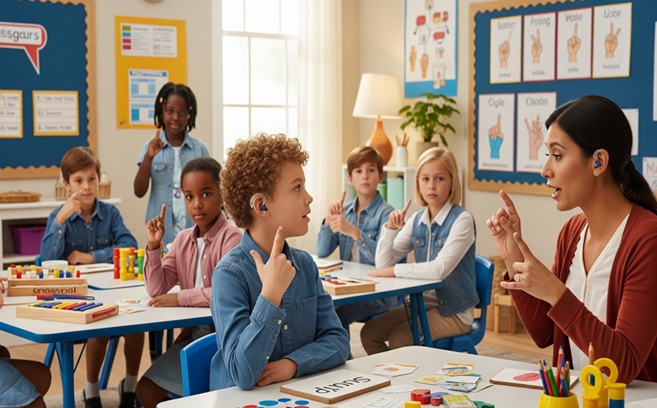
Children with both autism and hearing challenges often require tailored educational environments. Teachers and caregivers can collaborate with therapists to create inclusive classrooms where students can focus and thrive.
Some strategies include:
- Seating the child close to the teacher to maximize sound clarity.
- Reducing background noise through carpets or sound-absorbing materials.
- Using visual aids, gestures, and written cues to support verbal instructions.
- Incorporating short sensory breaks to prevent overstimulation.
Audiologists and ABA therapists can advise schools on audiology services such as assistive listening devices or classroom sound systems. These technologies ensure children hear important cues—like a teacher’s instructions or a peer’s question—without distraction or strain.
When families, educators, and providers coordinate, learning environments become more responsive to each child’s sensory and communication needs.
Emotional Support for Parents and Caregivers
Behind every thriving child is a family working tirelessly to make it happen. Parents of children with autism and hearing differences often navigate an emotional roller coaster—balancing hope, fatigue, and moments of uncertainty.
Counseling, peer groups, and parent education sessions can offer essential emotional support. Many autism ABA therapy providers, including Sunshine Advantage, encourage family participation and coaching so caregivers feel equipped to handle daily challenges.
Audiologists like those at Infinity Hearing also provide parent education on maintaining hearing aids, troubleshooting equipment, and understanding behavioral responses related to sound. When parents are confident, children mirror that sense of calm and consistency—accelerating both comfort and progress.
How Families Can Advocate for Their Child’s Needs
Advocacy starts with knowledge. Parents can make a tremendous difference by understanding their child’s unique combination of needs and communicating effectively with providers and schools.
A few advocacy steps include:
- Request comprehensive testing: Ask for both developmental and audiological evaluations early.
- Keep open communication: Share progress or regressions with all providers regularly.
- Document observations: Track responses to sound, communication milestones, and sensory triggers.
- Participate in meetings: Attend IEP or care coordination sessions with questions and notes.
- Celebrate progress: Recognize small victories to stay motivated and positive.
Families who engage in care decisions become powerful partners in shaping long-term success. With consistent advocacy, they ensure that interventions are personalized and effective—rather than fragmented or duplicated.
A Lifelong Journey of Growth
Children with autism and hearing challenges may progress differently from peers, but their capacity for growth is extraordinary. Each milestone—recognizing a parent’s voice, responding to a question, or joining a conversation—represents not just skill, but connection.
Through the combined expertise of audiology specialists like Apex Audiology, comprehensive hearing support from Infinity Hearing, and individualized autism ABA therapy from Sunshine Advantage, families have access to a continuum of care that nurtures both listening and learning.
Early, collaborative intervention transforms communication barriers into stepping stones toward independence. And as children learn to navigate sound, language, and emotion, they remind us that progress isn’t measured only in words—but in understanding, empathy, and the joy of being heard.