

Federal Law Enforcement Officers in Dallas: How DEA, FBI, and CBP Employment Disputes Work Under a Different Set of Rules

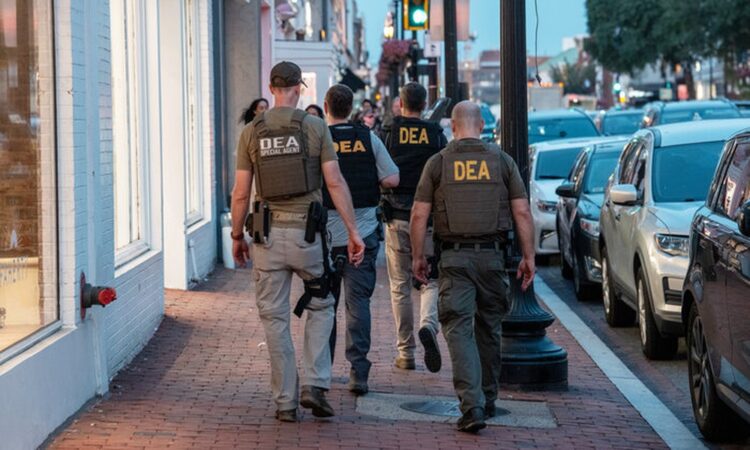

The Dallas metropolitan area hosts a substantial federal law enforcement infrastructure. The FBI’s Dallas Field Office on North Central Expressway serves one of the largest FBI field divisions in the country. DEA’s Dallas Field Division operates with a presence across the DFW area and beyond. Customs and Border Protection has a significant operational footprint tied to DFW International Airport and the broader Texas border region. When Special Agents, Diversion Investigators, Border Patrol Agents, and CBP Officers at these agencies face employment disputes – a proposed removal, a discrimination claim, a retaliatory assignment, or a security clearance suspension – the legal framework they operate under differs in meaningful ways from the framework that governs civilian federal employees at the IRS, SSA, or FDA. Any Dallas federal employee attorney handling federal law enforcement employment cases needs to understand those differences before advising a client, because the standard civil service analysis often does not translate cleanly into these personnel systems.
The distinctions run through appointment types, clearance vulnerabilities, disciplinary culture, and the specific institutional dynamics of law enforcement agencies where the costs of raising internal concerns are higher than almost anywhere else in the federal government.
Appointment Types and What They Mean for MSPB Rights
Not every federal law enforcement officer has the same access to Merit Systems Protection Board appeal rights, and the variance in appointment types across the three agencies discussed here illustrates why the threshold analysis matters before any strategy is developed.
FBI Special Agents hold excepted service appointments. The FBI is an excepted service agency, meaning its employees are not in the standard competitive service that confers automatic MSPB appeal rights for covered adverse actions under Title 5. Whether an FBI Special Agent has MSPB appeal rights depends on the specific nature of their appointment and their tenure. Career FBI employees who have served long enough in their positions may acquire appeal rights through the Pendleton Act veterans’ preference framework or through specific statutory protections, but the default assumption that applies at most civilian agencies – that a career competitive service employee has MSPB rights – does not automatically hold for FBI agents.
DEA Special Agents and Diversion Investigators are employed in excepted service positions as well, under DEA’s appointment authority. Similar analysis applies.
CBP Officers and Border Patrol Agents have a more complex picture. CBP employs both competitive service and excepted service personnel depending on the specific occupational category and appointment mechanism. The MSPB’s jurisdiction over CBP adverse actions requires fact-specific analysis of the appointment type.
For all three agencies, the practical implication is that the first question after a proposed adverse action arrives is not “when do I file my MSPB appeal” but “do I have MSPB appeal rights at all, and if so, under what authority.” Getting that question wrong – filing a grievance that consumes the election when MSPB was the better forum, or missing the MSPB appeal window while pursuing a grievance that doesn’t apply – has consequences that can’t be undone.
Law Enforcement Disciplinary Culture and Why It Shapes Employment Disputes
Federal law enforcement agencies share institutional characteristics that shape how employment disputes arise, how they escalate, and what obstacles employees face when they try to exercise their rights. These characteristics aren’t incidental – they are products of the agencies’ operational culture that directly affect the legal landscape.
Hierarchical command structure and unit loyalty are central organizational values in federal law enforcement. An agent who files an EEO complaint against a supervisor, raises a discrimination concern, or reports supervisory misconduct through internal channels is creating friction with those values in a way that generates informal consequences even before any formal adverse action is taken. The retaliation in law enforcement agencies often operates through the informal channels that matter most in those environments: assignment to less desirable cases, exclusion from special operations, detail assignments to locations away from home, and the supervisory evaluations that determine career advancement. These informal consequences are harder to document than formal adverse actions and harder to characterize as retaliation in the legal sense – but they are often the primary mechanism through which retaliation is actually delivered.
When formal adverse actions follow complaint activity in law enforcement agencies, they frequently involve allegations tied to the nature of law enforcement work itself: allegations of use of force policy violations, of improper conduct during investigations, of disclosure of case information, or of insubordination in responding to supervisory direction. These allegations are difficult to defend because they involve discretionary judgments in operational contexts where the agency has substantial latitude, and because the factual record of what happened in the field is typically controlled by the same supervisory structure that is alleged to be retaliating.
Building a retaliation case in a federal law enforcement environment requires the same contemporaneous documentation discipline that every retaliation case requires – but with particular attention to documenting both the protected activity and the operational allegations that follow it in real time, because the gap between what actually happened in the field and what appears in the agency’s subsequent documentation can widen quickly when supervisors have both the authority and the motivation to construct a narrative.
Security Clearances at DEA, FBI, and CBP: The Career-Ending Vulnerability
All three agencies require security clearances – Top Secret in most cases for Special Agent positions, with SCI access for many assignments. The Department of the Navy v. Egan doctrine limits MSPB review of security clearance decisions on the merits, and in law enforcement agencies this limitation is applied with particular force because the national security and law enforcement missions provide strong institutional justifications for clearance adjudication that courts are reluctant to second-guess.
A clearance revocation at the FBI, DEA, or CBP is not merely a professional inconvenience. For a Special Agent whose position requires TS/SCI access to perform every meaningful function of the job, clearance revocation is effectively career termination. The agency can place the agent in a non-duty status, can ultimately remove them for inability to perform the essential functions of the position, and the MSPB cannot review whether the clearance decision was correct on the merits – only whether the removal itself was procedurally proper.
The intersection of clearance actions with employment discrimination and retaliation creates the most legally complex situation in federal law enforcement employment disputes. When an agent filed an EEO complaint and the clearance suspension followed, the Egan doctrine limits the MSPB’s ability to examine whether the clearance action was pretextual. But the connection between protected activity and a subsequent clearance action – if it can be established – provides a basis for arguing that the clearance action itself was a prohibited personnel practice. That argument requires establishing the factual predicate clearly and in the right forum at the right time.
For Dallas-area DEA and FBI agents who are facing clearance investigations following EEO complaint activity or whistleblower disclosures, the timing of legal intervention matters significantly. The Statement of Reasons response is where the record is built. Waiting until after the clearance is revoked to seek legal counsel means working with a record that was constructed without strategic guidance.
CBP at DFW: The Additional Dimension of Use-of-Force and Integrity Investigations
CBP Officers at DFW International and Border Patrol Agents in the Texas sector face a specific disciplinary exposure that is less prevalent at DEA and FBI: use-of-force incidents that generate both disciplinary proceedings and independent OIG or OPR investigations. When a CBP officer’s use of force during a screening or enforcement encounter generates an adverse finding, the case typically involves multiple concurrent proceedings – the agency’s disciplinary process, a CBP OPR investigation, and potentially a DHS OIG investigation running simultaneously.
The convergence of multiple investigative streams against the same officer, at the same time, with different procedural rules and different rights at each stage, creates exactly the situation where the voluntary/compelled cooperation distinction discussed in other contexts becomes most critical. A CBP officer who voluntarily provides statements in one proceeding without understanding how those statements can be used in a parallel proceeding has created avoidable evidentiary problems. The right sequence and scope of cooperation at each stage is a legal analysis, not an institutional compliance decision.
Consulting a Dallas Federal Employee Attorney About Federal Law Enforcement Employment Matters
Federal law enforcement employment disputes at the FBI, DEA, and CBP require legal counsel who understands the intersection of excepted service appointment analysis, Egan doctrine limitations, law enforcement disciplinary culture dynamics, and the specific multiple-proceeding exposure that CBP officers and federal agents face when conduct during operations is at issue.
The Mundaca Law Firm represents federal employees in Dallas, including federal law enforcement officers at the FBI Dallas Field Office, DEA Dallas Field Division, and CBP DFW and regional operations, in EEO complaints, adverse action defense, security clearance proceedings, and related matters. If you are a federal law enforcement officer in the Dallas area dealing with an employment dispute, contact the firm to schedule a consultation and get an accurate assessment of which framework applies to your specific appointment and situation.